 Reviews

 Proudly American

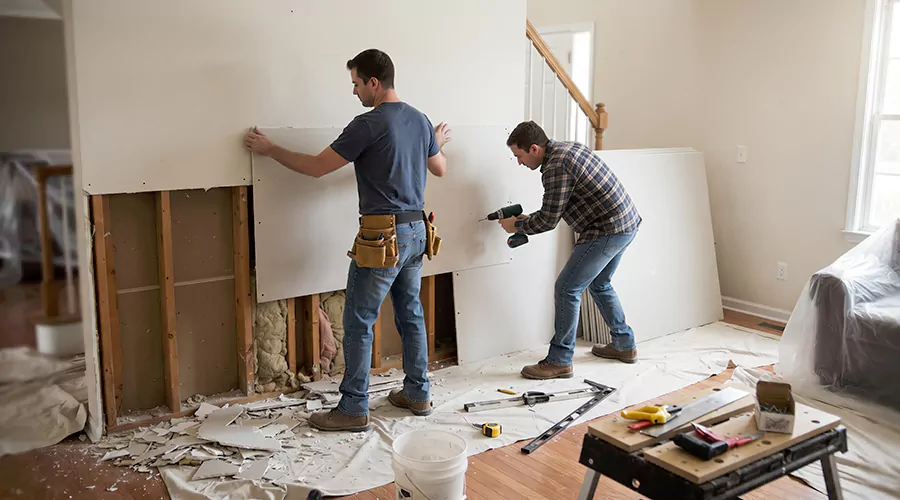
Drywall should be replaced after water damage when it becomes soft, swollen, sagging, moldy, contaminated, or unable to dry fully within about 24 to 48 hours. Minor clean-water exposure can sometimes be dried in place when the board stays firm and moisture readings return toward normal. In these cases, water damage drywall repair may help restore the affected area without requiring complete drywall replacement.
Can Wet Drywall Be Saved?
Wet drywall can sometimes be saved when the water came from a clean source and the exposure was brief. The board should remain firm with no swelling or paper separation. The wall cavity must also dry fully before paint or other finishes are repaired.
Drywall is more likely to be salvageable when:
- The leak was stopped quickly.
- The water came from a clean supply line.
- Only a small area became damp.
- The board remains hard when pressed gently.
- No mold is visible.
- Insulation behind the wall stayed dry.
When Should Drywall Be Replaced?
Drywall usually needs replacement when water has weakened the board or introduced contamination that cannot be cleaned from a porous surface. Replacement also makes sense when wet drywall prevents the wall cavity from drying properly.
Common replacement conditions include:
- The drywall feels soft or spongy.
- The panel has started sagging.
- The paper facing is peeling.
- The board has swollen around seams.
- Visible mold is growing.
- A musty odor remains after drying.
- Sewage touched the drywall.
- Outdoor floodwater entered the wall.
- Wet insulation is trapped behind it.
- Moisture remains elevated after active drying.
CDC guidance for major flooding recommends removing porous materials that have stayed wet for more than 48 hours and cannot be thoroughly cleaned and dried. Drywall is among those porous materials.
Does the Water Source Change the Decision?
The water source can completely change whether drywall is worth saving. Clean water from a recent plumbing leak creates the best chance for drying. Sewage or outdoor floodwater creates a much stronger case for removal because porous drywall can absorb contaminants.
| Water Source | Typical Drywall Decision |
|---|---|
| Clean pipe leak | Drying may be possible |
| Clean appliance leak | Inspect and dry quickly |
| Gray water | Evaluate saturation carefully |
| Sewage backup | Replacement is usually appropriate |
| Outdoor floodwater | Replacement is usually appropriate |
What Happens if Wet Drywall Is Left in Place?
Wet drywall can lose strength while trapping moisture inside the wall assembly. Paint may bubble later while joint compound can loosen. Moisture behind the panel can also keep insulation or wood framing damp.
| Stage | What You May Notice | Likely Response |
|---|---|---|
| Early | Small stain or damp spot | Stop source and begin drying |
| Developing | Peeling paint or swelling | Check hidden moisture |
| Advanced | Soft board or loose paper | Replace damaged section |
| Severe | Mold or contamination | Remove affected material |
How Can You Check Water-Damaged Drywall Yourself?
A moisture comparison can help determine whether drywall is drying. Use a moisture meter suitable for drywall and compare the affected section with a similar dry wall elsewhere in the home.
- Choose a dry reference wall.
- Take a moisture reading.
- Test the affected wall at several points.
- Mark the locations.
- Repeat the readings the next day.
- Look for a steady decline.
Do not cut into a wall simply to inspect it when wiring or plumbing could be hidden behind the surface.
Should Drywall Be Replaced if Mold Appears?
Mold on water-damaged drywall often makes removal more practical than surface cleaning because drywall is porous. Growth can extend into the paper facing or onto the backside of the panel where it is not visible. The EPA recommends drying wet materials within 24 to 48 hours when possible to reduce mold growth. Drywall that stays wet beyond this period deserves closer inspection before it is covered or repaired. Painting over visible mold does not solve the underlying moisture problem. Any continuing leak should be corrected before the wall is rebuilt.
What About Wet Insulation Behind Drywall?
Wet insulation can change the decision even when the drywall surface still looks acceptable. Insulation can hold moisture inside the wall cavity and slow the drying of nearby framing. Opening the wall may be necessary when the insulation cannot dry properly in place.
Signs that insulation may be wet include:
- Water entered from above the wall.
- The lower wall stayed saturated.
- Moisture readings remain high.
- A musty odor persists.
- The wall feels unusually cool.
- Floodwater reached the cavity.
After major flooding, CDC guidance identifies insulation and drywall among porous materials that may require removal when they cannot be thoroughly cleaned or dried.
New drywall should not cover a damp wall cavity.
When Should You Call a Professional?
Professional assessment is appropriate when a large section of drywall is wet or the water source is contaminated. Help is also useful when moisture appears to extend into insulation or wall framing.
Consider professional water damage restoration when:
- Several walls are affected.
- Sewage or floodwater reached the drywall.
- Electrical outlets became wet.
- The ceiling is sagging.
- Mold covers a large area.
- Wet insulation is behind the wall.
- Moisture readings stay high after drying.
- The source is unclear.
Ceiling drywall deserves extra caution. Water can weaken a saturated panel and increase the risk that part of the ceiling will sag or fall.
How Can You Prevent Drywall Water Damage?
Most drywall damage becomes expensive because leaks continue unnoticed. Regular checks around plumbing or appliances can catch moisture before it spreads through wall cavities.
Use this routine:
- Check beneath sinks every month.
- Inspect appliance hoses several times a year.
- Look for ceiling stains after heavy rain.
- Test sump pumps before storm season.
- Use leak alarms near water heaters.
- Investigate musty odors promptly.
- Repair small leaks quickly.
Moisture prevention also includes controlling indoor humidity. Persistent high humidity can slow drying and create damp conditions inside poorly ventilated areas.
Conclusion
Drywall does not always need replacement after water damage. A small clean-water exposure can sometimes dry successfully when the panel remains firm and moisture levels return toward normal. Replacement becomes more likely with softness, swelling, mold, contamination, or trapped wet insulation. If the wall stays wet beyond the first 24 to 48 hours, inspect it carefully before refinishing the area.
Frequently Asked Questions
Does every water stain mean drywall must be replaced?
No. A dry stain can remain after a minor leak even when the drywall is sound. Fix the source and check moisture first.
Can wet drywall dry without being removed?
Yes. Limited clean-water exposure may dry in place when the board remains firm and airflow reaches the affected area.
How long can drywall stay wet?
Drying should begin immediately. Wet porous materials that cannot be thoroughly dried within about 24 to 48 hours need closer evaluation.
Should ceiling drywall be replaced after a leak?
Replace it when it sags, softens, separates, or remains wet. Sagging ceiling panels can also become unstable.
Can you paint over water-damaged drywall?
Only after the source is fixed and the drywall is fully dry. Soft or mold-damaged drywall should not simply be painted.
Does wet insulation mean drywall has to come out?
Often, wall access is needed when insulation remains wet because the cavity must be dried before it is closed again.